
 All I wanted to know was if human beings really NEED dairy products. That’s all. Simple question. The U.S. government, via its food pyramid, says we do. Vegans, on the other hand, say we can live quite healthily without it.
The answer to the question itself is pretty simple (no, we don’t really need dairy), but all the components of the answer had me researching more than I really wanted to on calcium and vitamin D and protein and osteoporosis and cancer. I was shocked to find there may be far more reasons to AVOID dairy and excess calcium than there are to consume it.
If you ask the average person on the street if they think we need dairy, they are likely to say, “yes, of course we do – we need the calcium.” And that’s the answer you’ll get just about everywhere if you try to look up WHY we need dairy products. As if dairy products are the only source of calcium. Take calcium out of that equation and nobody can think of a single reason why we should have two to three servings of milk every single day. I mean, seriously, even the freaking COWS don’t drink the stuff beyond infancy.
Studies that have shown a link between weight loss and dairy products actually point to the calcium as the weight loss trigger, not the actual dairy products.
I was reading a “scientific” study on the effects of calcium on weight loss and the ONLY calcium source they used in their studies was dairy. They claimed that women who did not take in enough dairy were overweight A second study showed that the more people reduced their consumption of dairy products over the six-year period examined, the more weight and body fat they gained and the bigger their waistlines grew. Which is all good news for calcium consumption, but it really doesn’t have a thing to do with dairy. They did not study the effects of the calcium from sources other than dairy.
So, getting down to the basics - why do we need calcium? Obviously because it strengthens bones and helps nerves and muscles to function properly. It’s crucial for blood clotting and heartbeat maintenance. But if you don’t get an adequate amount of calcium in your diet, your body will start hitting up your bones for the calcium it needs to function. And that’s not good. If the bone sucking continues too long, the result is osteoporosis.
All of that is pretty straightforward, but when I tried to find out how much calcium and how much vitamin D the average person needed on a daily basis, and how much IS required versus how much SHOULD be required, it all got complicated. And it gave me a headache. Since I don’t want to give YOU a headache, I’m just going to touch on the basics of the calcium controversy.
The US RDA for calcium is1000 mg – or 1200 mg if you are over 50.
Dairy is usually the most attractive source of calcium because of its perceived high concentrations (300 mg per 8-ounce glass of whole milk) – but it certainly isn’t the only source. A one-cup serving of a green, leafy vegetable is low in calories and high in calcium - spinach (350 mg), kale (250 mg) and broccoli (80 mg) are all excellent sources. And none of them have one bit of the saturated fat of dairy products.
Complicated points I don’t intend to get into but you should probably know: 1) Calcium needs vitamin D for absorption. Thirty to sixty percent of people do not get enough vitamin D for any calcium they ingest to be beneficial. 2) A high animal-protein diet causes calcium loss. The RDA for calcium is intentionally set higher than we really need to compensate for our animal-protein intake. 3) Calcium is not the only mineral involved in the prevention of osteoporosis. Magnesium, vitamin D, boron, vitamin K, vitamin C, ipriflavone, silicon, and vitamins B6, B12, and folate are all required in the prevention of osteoporosis.
A link has been shown between high consumption of dairy products to ovarian and prostate cancer. But wait – it gets even more interesting: Studies indicate that osteoporosis (which affects 20 million American women), and ovarian cancer are most common in those countries with the highest consumption of dairy food and lowest in those countries with low dairy intake. Benign breast conditions, recurrent vaginitis, acne, menstrual cramps, fibroids, chronic intestinal upset and increased pain from endometriosis have also been associated with dairy consumption.
Although the US recommends 1000 -1200 mg of calcium per day, The World Health Organization only recommends 400 – 500 mg per day. Why? Because most countries do not ingest the amount of animal protein that we do. Vegetarians generally have a lower protein intake and are better able to absorb calcium, so their calcium needs are going to be much lower than someone who eats a diet heavy in protein.
The bottom line is that we can get an adequate amount of calcium and vitamin D from sources other than dairy. Besides green, leafy vegetables, calcium can also be found in nuts, beans and tofu. And getting your calcium from plant-based sources gives you more nutrients all the way around than you can get from dairy products. Fiber, anyone?
So, something to think about the next time you’re choking down a glass of milk just because it’s “good for you”. I will be happy to stop obsessing about getting in enough dairy but, until an adequate substitution is found, I cannot and will not give up cheese.
Cheese is just good food.
A complicated dairy issue
Monday, June 15, 2009
Can we even LIVE without the acai berry?
Wednesday, April 15, 2009
 You know, you just can’t swing a cat around the internet these days without hitting an ad guaranteeing the loss of 30 pounds in 30 days via the miracle of the acai berry.
Besides the fact that I have absolutely no idea how to pronounce that, I also realized I have just been blah-blah-blah-ing myself past any articles or advertisements that mention it. Because rolling my eyes so hard is sometimes painful. So I decided the time had come to look it up.
First, I looked up the pronunciation. Ah-sigh-EE – okay, that feels very awkward. I think I’ll stick with my original mispronunciation of eye-KAY-uh…like IKEA, in a dyslexic sort of way.
The first thing you should know is you cannot trust any information you pick up via a Google search for “acai berry”. Every single link has THE ONLY PRODUCT guaranteed to work. They almost all throw around the names of Oprah, Rachael Ray, Dr. Oz, Gwyneth Paltrow and/or Summer Redstone – whoever the heck that is – as if they have given their personal endorsement. Oprah’s lawyers are reportedly not amused.
Also, for the record, I would never buy anything from a website that consistently uses “it’s” when it means “its” – for example, “known for it’s healing properties, scientists recently discovered it’s many benefits…” [Jelly Belly grammar tip – if you can’t replace the “it’s” with “it is”, then drop the dang apostrophe]. But that may just be me.
Grammar rant aside, I only wanted basic information, so I sifted through the crap (and lots of it) and found the following:
What it is: The acai berry is a tiny black fruit. It comes from South America, via a special Amazon palm tree that is harvested in the rainforests of Brazil. The berry has a very short post-harvest life which is why, unless you live in the rainforests of Brazil, you can only get it in the form of juice or pulp. Which is probably also the justification for its ungodly price.
The claims: Touted as having the highest antioxidant content of any food, together with a high (non-specified) fiber content, the acai berry is being hailed as a cure all – this tiny little berry is purported to provide increased energy, improved sexual performance, sleep, digestion, and skin appearance. It will also strengthen your immune system, fight cancer, improve circulation, slow down the aging process, improve heart health, reduce cholesterol levels and detoxify your system.
As if all that weren’t enough, some sites claim you can expect to reverse diabetes and other chronic illnesses. Men can look forward to an increase in penis size and virility and (duh!) become more sexually attractive to women.
But let’s not forget its most important benefit: Weight loss. Oh, yes – it will make you lose weight. All you have to do is send for your “free” trial offer of the supplement, cut out all sugar and fried foods, avoid processed foods, drink lots of water, exercise 3-5 times per week and watch the pounds melt off. It’s a miracle! (Click here for some info on what the “free trial” might cost you.)
Some research: According to Wikipedia (don’t judge me – it’s HARD to find non-commercial information on this stuff!), research showed the antioxidant content of the acai berry juice to be lower than concord grape juice, pomegranate juice, blueberry juice and red wine. It was about the same as black cherry or cranberry juice but higher than orange juice, apple juice and tea.
So what does it all mean? Ever since Dr. Oz handed Oprah an acai berry smoothie, proclaiming it one of the healthiest foods on the planet, the internet has gone crazy with people trying to cash in.
Does the acai berry have antioxidant properties? Yes, apparently it does. Does it have significantly more health benefits than, say, blueberries (always a top-rated antioxidant)? Doesn’t appear to. Will I pay $40 for a bottle of acai berry juice? Not a chance in hell. I’d go with a nice bottle of red wine first.
When you cut through all the marketing hype, it seems to me the acai berry is no more or no less of a “superfood” than any other berry. Especially blueberries, which I can pick up at a reasonable price in any grocery store. If I didn’t have a black thumb, I could probably even grow them in my backyard.
So, for me, I’m not anxious to hop on this bandwagon. What about you? Have you tried it? If so, what did you think?
Oh, nuts!
Wednesday, March 18, 2009
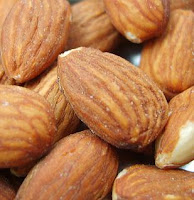
By now I think everybody has pretty much “got it” that almonds are good for you. What? A food that’s good for you AND tastes good? I know; hard to believe, right? It’s true – they’re always popping up on those “superfoods” lists, and with good reason.
Almonds have been shown to do all kinds of wonderful things, including stabilizing blood sugar, building muscle, lowering cholesterol, fighting off food cravings and helping with weight loss and maintenance. And when you put all those things together, they put up a pretty good fight against diabetes, obesity, heart disease and cancer.
Of course, I have to burst your bubble right off the bat and point out that you want to avoid almonds that are heavily salted or smoked – all that sodium isn’t too great for your blood pressure.
Many people shy away from eating nuts because of the high fat content. Guess what? You’re worrying for nothing. Sure, they have about 14 grams of fat per 1-ounce serving – but it’s monounsaturated fat. The good stuff. The fat that helps you to feel full and keeps your arteries clear.
Of course, you don’t want to go all crazy with the almonds. If you’re watching your weight, that one ounce of almonds will cost you about 164 calories. But it will also give you 6 grams of protein and 3 grams of fiber – and those are some good snacking numbers. And adding an apple or an orange to those almonds can get you through pretty much any afternoon.
Interesting scientific study: A 28-month study that involved 8,865 adult men and women, found that those who ate nuts at least two times per week were 31% less likely to gain weight than those who never ate nuts.
Ounce for ounce, almonds are the one of the most nutritionally dense nuts. Besides the protein, fiber and monounsaturated fats, they are also a great source of vitamin E, magnesium and phosphorus. And flavonoids. Okay, I had to look up flavonoids. Even though I didn’t want to. Turns out flavonoids are just a compound that gives fruits, vegetables and nuts their antioxidant properties.
Of course, walnuts, pecans and chestnuts have the highest antioxidant content of the tree nuts, and peanuts (a legume, technically speaking) are also holding their own with the antioxidants.
So how much should you eat? Just one handful of almonds (about 1-ounce) or one tablespoon of nut butter (and that includes natural peanut butter, my friends) four times per week will significantly lower your risk of cardiovascular disease – up to 37%.
Eating the almonds with the skins intact actually increases its vitamin E and antioxidant properties and has been shown to lower LDL (bad) cholesterol.
Oh, and good news for those of us with portion-control issues! Emerald Natural Almonds has recently introduced a 100-calorie pack. Finally! A 100-calorie pack I don’t have to hate.
And are you ready for this? Cocoa Almonds. Not your traditional chocolate-covered nut, but an almond lightly dusted in dark chocolate. That should help with some of those nasty chocolate cravings. I have heard you can find these in Target, but I have not yet personally seen them.
And don’t forget – almonds are delicious sprinkled on salads or vegetables. And nut butters are good on toast and on celery sticks. Of course, I’m still a fan of the peanut butter and banana sandwich – but now I feel a little better about that.
How much protein do you really need?
Sunday, March 8, 2009
 Protein can be a tricky subject when it comes to how much an average person needs on a daily basis. Because the amount you need can vary based on factors such as your age, gender and level of physical activity. But what doesn’t vary is that we all NEED protein. It is indispensable for the growth and maintenance of every single cell in our body.
Okay, I don't want to get too scientific – but this one scientific fact is the important one, germaine to this discussion. We need 20 different amino acids in order to produce all of the proteins in our bodies. We can manufacture 10 of the amino acids with, thankfully, very little effort on our part. The other 10, however, either cannot be made or cannot be made in quantities large enough to be of any use. And this, my friend, is where protein in your diet comes into play. Those missing 10 essential amino acids must be obtained from food.
Okay, so back to the original question. How much do you need? To find the definitive answer to this question, I turned to our government and climbed up to the meat and beans level of its food pyramid. Here is a small part of their helpful chart:
Women
19-30 years old - 5 ½ ounce equivalents
31-50 years old - 5 ounce equivalents
51+ years old - 5 ounce equivalents
Men
19-30 years old - 6 ½ ounce equivalents
31-50 years old - 6 ounce equivalents
51+ years old - 5 ½ ounce equivalents
These amounts are appropriate for individuals who get less than 30 minutes per day of moderate physical activity, beyond normal daily activities. Those who are more physically active may be able to consume more while staying within calorie needs. (Side note: Isn’t it interesting that they default to people who get LESS than 30 minutes of exercise per day?)
The glaringly obvious problem with this chart is that no one has ANY IDEA what an “ounce equivalent” is. Of course, leave it to the U.S. government not to give you any of these figures in grams. Let’s talk “ounce equivalents” instead. Wouldn’t want to go all metric on a government website.
In general, 1 ounce of meat, poultry or fish, ¼ cup cooked dry beans, 1 egg, 1 tablespoon of peanut butter, or ½ ounce of nuts or seeds can be considered a 1-ounce equivalent from the meat and beans group.
So now they’ve forced me to do the math. If a sirloin steak has about 8 grams of protein per ounce, then that means a woman aged 31-50 who exercises less than 30 minutes per day, needs roughly 40 grams of protein on a daily basis. Although, theoretically, based on the whole “ounce equivalent” thing, I could just eat 5 tablespoons of peanut butter every day and be done with it.
Sometimes I think the old standard of .4 grams of protein per pound of body weight is still a good rule of thumb. For example, if you weigh 130 pounds, using this formula will tell you that you should get about 52 grams of protein per day – not all that far off from the government recommendation – and you don’t have to deal with ounce equivalents.
Of course, anyone working out regularly will need more. And that’s a whole different post. But one important point to remember is that the human body can only assimilate 50 grams of protein in one sitting. Anything in excess of that will just get flushed right out of your system.
Although animal products are the most common source of protein, it’s really not a good idea to put all of your eggs in that basket, so to speak, because they tend to be a lot higher in cholesterol and saturated fats than vegetable sources like beans, soy and nuts. And don’t forget the actual vegetables themselves - broccoli and spinach, for example, which are low-fat, cholesterol-free protein options.
Darn it. Too long again. Sorry. Condensed version: Eat protein.
Footnote for the scientifically inclined: These 10 “essential” amino acids which must be obtained from food are: threonine, lysine, methionine, arginine, valine, phenylalanine, leucine, tryptophan, isoleucine and histidine. The 10 we CAN make are glycine, alanine, serine, cysteine, aspartic acid, glutamic acid, asparagine, glutamine, tyrosine and proline.
Wow. Sodium really sucks
Sunday, January 25, 2009
 I try to avoid processed foods as much as possible. Not because they’re generally full of ingredients I can’t pronounce, but because it always seemed that whenever I ate them, I gained weight. I enjoy a Lean Cuisine panini every now and again and assumed the jump in weight I enjoyed afterward was carb related. I think I was wrong.
Experts are always advising us to avoid frozen meals because they are “high in sodium”. But what constitutes “high”? How much is enough and how much is too much? I realized I didn’t have a clue, so I looked it up.
For purposes of perspective, let’s first look at these facts about sodium:
Amount your body actually needs on a daily basis: 500 mg
Maximum amount you should take in on a daily basis: 2300 mg
Maximum for people who are black, over 50, or suffering from high blood pressure: 1500 mg
Amount of sodium in one TEASPOON of table salt: 2300 mg
What I ate for breakfast, lunch and afternoon snack on the day I looked this up:
1 serving of oatmeal
2 cups raw cauliflower, 1/2 cup raw broccoli, ¼ cup sliced green olives, 1 ounce lean ham which I mixed with a dressing made with fat-free sour cream and Hidden Valley Ranch dressing mix
1 Lite Flat Out whole grain wrap
2 ounces Hillshire Select turkey breast
1 slice Kraft 2% Swiss Cheese
1 cup of strawberries
Total sodium for above (according to Sparkpeople)? 3400 mg.
That’s off-the-hook insane. I hadn’t even eaten dinner yet and I was well over the “legal limit” for sodium consumption. And I thought I was eating so well. Sigh.
Salt is used as a preservative, which is why the sodium content of most processed foods is so high. Frozen meals, lunch meats, cheeses and breads are crazy high. And, please – go grab a can of Campbell’s Chicken Noodle Soup and take a look at that. Ouch!
Comparing the sodium content of 3 ounces of white meat turkey with 3 ounces of lunch meat turkey freaked me out a little bit:
Turkey you roast yourself: 55 mg of sodium. That turkey from the deli? About 900 mg.
So now you may say, “But Mrs. Jelly Belly, I like salt - and I am a rebel, to boot. Why should I care about sodium content?” Because, dear person, too much sodium – especially in people who might be sodium sensitive, leads to high blood pressure, which leads to other ugly things like stroke, cardiovascular disease and kidney failure. And if you don’t care about that, how about water retention? Now THAT’S ugly.
Your body does require a certain amount of sodium to function. But if you get too much and your kidneys can’t eliminate enough of the excess, it starts to accumulate in your blood. The excess sodium attracts and holds water, increasing your blood volume. Increased blood volume, in turn, makes your heart work harder to move more blood through your blood vessels, increasing pressure in your arteries. And there you have it – high blood pressure.
I am not going to obsess over this sodium thing. I am not. What I will do, however, is pay more attention to labels and make some small changes:
- Roast a turkey on Sunday and use the leftovers for sandwiches and salads during the week. Cheaper than lunch meat and it tastes better, too.
- Avoid processed foods – and fast foods. (Yikes! You should look that one up, too.)
- Use herbs and spices for flavoring food, rather than salt-based seasonings.
- Opening a can of beans? Dump them in a colander and give them a good rinse before using them. You eliminate a lot of the sodium that way.
- Buy low-sodium canned goods whenever possible.
For your sodium viewing pleasure, you can look up the sodium content of a lot of foods here. But don’t say I didn’t warn you.
Understanding labels: How much is a gram?
Monday, January 5, 2009
 When reading the ingredients label of your foods, trying to ascertain the exact amount of sugar in the product, do you really understand what you’re looking at? I was always confused by grams, not knowing exactly how that related to my everyday non-metric life. So about a year ago, I looked it up and it’s made it easier to understand. And frightening.
Four grams of sugar is roughly equivalent to one teaspoon.
So that Orange Julius Pina Colada Smoothie that I foolishly ingested last week? I looked it up, and a 20 ounce serving contains 560 calories and a shocking 93 grams of sugar. And, I shouldn’t admit this, but the one I had just may have been 32 ounces. Oink, oink.
Okay. To get an idea of how much sugar I swallowed that day, picture me standing at my kitchen counter with my sugar bowl and a nice cup of tea and counting out almost 25 teaspoons worth of sugar and plopping it in there. And then DRINKING it. That’s disgusting, right? But we routinely do that kind of thing all the time and don't even think about it.
Read your labels, kids. You might just figure out where some of that extra weight is coming from!
Turmeric Tutorial
Friday, December 12, 2008
 The Vegan Breakfast Burrito recipe that I posted yesterday included the spice turmeric among its ingredients. This is a spice I only vaguely recall hearing about, but have never used. So I decided to look it up.
Turmeric (also known as Indian Saffron) is best known as one of the ingredients used to make curry, but it has long been considered a powerful anti-inflammatory in both the Chinese and Indian systems of medicine. Turmeric has been used throughout history as a condiment, healing remedy and textile dye.
[Textile dye? Okay, now I’m getting scared again…]
The description of turmeric that I read indicated that it has a “peppery, warm and bitter flavor” but, at the same time, has a fragrance “slightly reminiscent of orange and ginger.” Hmmm. An intriguing paradox, no?
Turmeric is an excellent source of both iron and manganese and a good source of vitamin B6, dietary fiber and potassium. It is also what is used to give your standard everyday French’s mustard its bright yellow color. Bet you didn’t know THAT, did you? See if you can impress people with that knowledge at your next barbecue.
(It is also suggested that you consider wearing kitchen gloves when handling this spice as its deep color can easily stain. Although if you get to it fast enough, soap and water ought to get it off of your hands.)
And this helpful suggestion I found: If you are able to find turmeric rhizomes in the grocery store, you can make your own fresh turmeric powder by boiling, drying and then grinding it into a fine consistency. Why, yes. I can certainly see us all doing THAT. Just point me in the direction of the McCormick’s, please.
Now, all of that background information aside, here are the claims being made for its medicinal properties. You can read all the scientific stuff (yawn) about these claims here.
Anti-inflammatory
An Effective Treatment for Inflammatory Bowel Disease
Relief for Rheumatoid Arthritis
Help for Cystic Fibrosis Sufferers
Cancer Prevention
Turmeric and Onions May Help Prevent Colon Cancer
Turmeric Teams Up with Cauliflower to Halt Prostate Cancer
Reduce Risk of Childhood Leukemia
Improved Liver Function
Cardiovascular Protection
Lowers Cholesterol
Protection against Alzheimer's Disease
Holy crap. Who knew a horribly-named spice like turmeric had so much going for it? I mean, really. I’m starting to think that a couple of teaspoons of turmeric every day will ensure my immortality. But I’m for sure adding this to my grocery list because I’m always looking for a way to perk up my vegetables. And I still want to make that Breakfast Burrito.
So assuming you have some turmeric jammed into a kitchen cupboard somewhere, but have no idea why you bought it or what you should use it for, here are some ideas – but don’t go crazy with it; apparently it can get bitter if overused:
- Spice up sautéeed onions, potatoes and/or cauliflower;
- Make a creamy vegetable dip: Just mix plain yogurt with a little omega-3-rich mayonnaise and turmeric, salt and pepper to taste. Serve with raw cauliflower, celery, sweet pepper, jicama and broccoli florets.
- Add turmeric to egg salad to give it an even bolder yellow color.
- Add to sautéed apples
- Mix brown rice with raisins and cashews and season with turmeric, cumin and coriander.
- Turmeric is a great spice to complement recipes that feature lentils.
- Give salad dressings an orange-yellow hue by adding some turmeric powder to them.
So there you go. Everything you always wanted to know about turmeric. And then some…
Be careful what you're putting on that pumpkin pie, Missy
Sunday, November 16, 2008
 The other day, I was having a discussion about pumpkin pie with my lovely niece Melissa (as I’ve told you…I live for the pumpkin – and Melissa is very like-minded) and, naturally, the conversation progressed to whipped toppings.
I mentioned that I prefer Reddi-Wip myself but Mr. Jelly Belly only likes Cool Whip so, of course that’s what we use. Melissa reminded me that I shouldn’t eat that “nasty stuff” because it’s loaded with trans fats and other fake, unhealthy ingredients.
I only buy fat-free Cool Whip. I buy that because I assume anything labelled "fat-free" is, indeed, free of fat. And I'm all about shaving those calories wherever I can. (Yeah, don't even suggest I give up the whipped cream entirely.)
I felt so gullible. After the big post I wrote on trans fats and the "per serving" scam and learning about what to look for in the ingredients list, I never even looked at the ingredients in Cool Whip. At first I didn’t believe her. This is FAT-FREE Cool Whip, not regular. But I had a sinking feeling.
Quickly, I googled up the ingredients, praying it wasn’t so. And what I found will keep me off of the Cool Whip forever.
Cool Whip contains hydrogenated oil, but according to the FDA (and I was confused about this) only oils that are “partially” hydrogenated contain trans fats. So, Cool Whip doesn’t contain trans fats, but what it does contain may make your hair curl.
I found a very enlightening article on Wired.Com that breaks down Cool Whip’s ingredients and calls it “a delicious blend of sugar, wax and condom lube.” Mmmmm…condom lube.
If you have been avoiding Cool Whip because of the trans fats, I guess this means you are free to enjoy it again. If you can enjoy it after you read this description of its ingredients. Yuck.
Here’s the Wired article in its entirety, or you can find the original post here. Any added emphasis is mine.
A delicious blend of sugar, wax, and condom lube.
Source: Wired.com
Natural and Artificial Flavorings
Corn Syrup and High-Fructose Corn Syrup
Polysorbate 60
Sodium Caseinate
Sorbitan Monostearate
Xanthan and Guar Gums
Doesn't that all sound yummy? Melissa tells me Whole Foods carries a perfectly delicious version of Cool Whip. And I'll bet it doesn't have one ingredient in it that would ever be used in the manufacture of hemorrhoid creams.
You know, I own a wire whisk or three - and an electric hand mixer. Perhaps I'll start whipping my own cream. It has just GOT to be easier than this.
Super K
Tuesday, November 11, 2008
 I hope you’re not going to be disappointed to find this post has nothing whatsoever to do with K-Mart.
Yesterday’s post about broccoli mentioned that it was a vegetable very high in Vitamin K. It was stressed as if that was really important. Because I have absolutely no idea what Vitamin K is or what it’s supposed to do for me, I put on my Food Detective hat and set out for the land of Google.
Turns out, Vitamin K is a simple vitamin to understand because it only does one thing. Hardly even worth the post, really, but now you will know for the rest of your life that if you did not have Vitamin K in your system, your blood would not clot.
Well that's pretty important. Nobody wants to slowly bleed to death from a shaving mishap. Or suppose your period just never stopped. Eventually, even a starving vampire wouldn't find you worth the effort.
It is very rare for a person to be Vitamin K deficient. (But it is important to note that a deficiency can occur following a long-term antibiotic treatment.) If you were deficient, all of your symptoms would relate to bleeding. Extended periods, bleeding gums, excess bruising...that kind of thing.
Vitamin K is produced in the body by normal gastrointestinal bacteria, but you might wonder what foods you can also find it in. I’m thinking probably Special K cereal – otherwise I just can’t explain the name.
Cabbage, cauliflower, spinach and other green, leafy vegetables are all good sources of Vitamin K. And CEREAL. Aha! I knew it. Oh. Wait. Maybe the "K" stands for Kellogg's.
(Food Detective on-the-fly research result: There is ZERO Vitamin K in Special K cereal.)
So there you have it. Eat your green vegetables and keep your blood inside your body.
What exactly IS an antioxidant?
Friday, November 7, 2008
 I hear (and use) the expression all the time and I know it’s a good thing – but what does it do exactly? Stop us from oxidizing? Doesn’t that imply that we might rust?
I realized that I used the word, but if someone asked me to explain it, I would be left stammering with a blank look on my face. So I decided to research it a little.
Here is the first definition I found:
Antioxidant: Any substance that reduces oxidative damage (damage due to oxygen) such as that caused by free radicals. Free radicals are highly reactive chemicals that attack molecules by capturing electrons and thus modifying chemical structures.
Whaaaaaat? Perhaps I should try again.
Oh, this is much better: Antioxidants are substances or nutrients in our foods which can prevent or slow the oxidative damage to our body. When our body cells use oxygen, they naturally produce free radicals (by-products) which can cause damage. Antioxidants act as "free radical scavengers" and hence prevent and repair damage done by these free radicals.
Okay, so now I think I get it. We’ve got cellular waste products (free radicals) floating around in our system and damaging everything they can get their little mitts on. So we need to get the antioxidants in there to wipe the free radicals out before they get us all diseased up and destroy our most favorite organs. Does that sound right to you? Sounds at least good enough to fool someone who asks me about it, anyway.
Eating foods high in antioxidants (also known as phytonutrients) has many health benefits, including slowing down the aging process (skin, brain, other organs), lowering the risk of heart disease and cancer and boosting your immune system, to help fight against colds and flu. There is also research indicating they can be helpful in the prevention of Alzheimer's Disease.
This now leads to the question of where we might find these important antioxidants. Vitamins C and E, of course, are the big ones. Other than supplementing, where do we get it? I hope it’s in some really good food. So I can feel all virtuous for eating it. Any chance I might find them in Alfredo sauce?
Alas, no. No Alfredo sauce in any of the “superfoods” lists I’ve looked at. But there are lots of other things listed that I actually do like. And a few that I am willing to try.
The highest-ranking fruits are berries (blueberries, strawberries, raspberries and blackberries), oranges, pink grapefruit, grapes, apricots, peaches, plums, prunes, raisins, pineapple and kiwi fruit.
The best vegetables are tomatoes, dark green leafy veggies (spinach, kale, etc.), Brussels sprouts, broccoli, beets, red peppers and carrots.
Kidney, pinto, red and black beans (dried) are also a great source, as are whole grains such as oats, barley and millet.
And let’s not forget the antioxidant properties of tea (green, white and black).
Interesting fact: The antioxidant content of tomatoes is actually increased by cooking, but cooking carrots decreases the antioxidant content.
It is recommended that you get in at least 5-8 antioxidant servings per day. Most of us only manage one or two. So have a couple more cups of tea, a big bowl of strawberries and blueberries (I don’t think adding Cool Whip negates the antioxidant benefits), throw some spinach in your salad and make up a pot of extra-beany chili.
Now follow that all up with a nice glass of red wine and you’re really kicking some free radical ass.
Giving vitamin D its due
Friday, October 3, 2008
 Poor little vitamin D, chugging along quietly in the background, helping us absorb calcium and strengthening our bones, while his better known siblings, like C, E and B12 get all the press.
Until I was diagnosed with a vitamin D shortage, I never really gave too much thought to what this vitamin does and why it’s important. I am one of those rare people who despise being in the sun – and it’s the sun that causes the body to produce vitamin D - so this diagnosis really came as no surprise to me, or to Mr. Jelly Belly, the great outdoorsman, who laughed when he heard about it.
The main job of vitamin D is to maintain normal blood levels of calcium and phosphorus. It aids in the absorption of calcium and may provide protection from osteoporosis, high blood pressure, cancer and several autoimmune diseases.
Other than exposure to sunlight (10-15 minutes twice a week – without sunscreen – should be adequate), vitamin D can be found in foods such as fish, eggs, fortified milk, cheese, yogurt and cod liver oil. Cod liver oil? Yeah, that’s what they said, but I have to seriously question whether anyone actually ingests that stuff.
Studies have shown a link between vitamin D deficiencies and depression, including seasonal affective disorder (SAD). This could be good news for people who would like to get off the Prozac and supplement their vitamin D instead.
Vitamin D deficiency can lead to rickets (skeletal deformities found in children) and osteomalacia (weak bones and muscular weakness, found in adults).
People who may be at risk for vitamin D deficiencies include the elderly, obese individuals, infants who are exclusively breastfed and those who have limited sun exposure. Individuals who have fat malabsorption syndromes, such as cystic fibrosis, or inflammatory bowel disease (Crohn’s disease) are also at risk.
The problem with supplementing vitamin D is that it’s possible to get too much – something that’s unlikely to happen from food sources or sun exposure. Too much vitamin D in your system can lead to symptoms like nausea, vomiting, poor appetite, constipation, weakness and weight loss. Now some of those don’t sound all too bad (I kid, I kid), but it can also cause more serious problems like confusion and changes in heart rhythm due to the raised levels of calcium in the blood.
So how much vitamin D is enough – and how much is too much?
There has been some research indicating the current recommendation of 200 IU’s per day for people under 50 and up to 600 IU’s for those over 50 may not be enough for most people and that 800–1000 IU’s may be more beneficial. As a general rule, you should never supplement more than 2000 IU’s per day.
And you probably shouldn’t supplement at all unless you know for sure you are deficient. This can be determined through a simple blood test.
So get out in the sun, enjoy it, and produce yourself some vitamin D. Your bones will thank you.
Happiness, thy name is pumpkin
Saturday, September 27, 2008
 Oh how I love the fall! Not only for the wonderfully cool, sunny weather, but it begins the season in which you can start eating pumpkin with impunity. Oh, sure, you can sneak some pumpkin into your oatmeal in the middle of May, but if you were spotted doing it people would think you were a bit off season – like sporting your flip flops in February – and talk about you behind your back.
But in the fall! Pumpkin products fill the marketplace and the glorious scent of pumpkin candles, pumpkin room sprays and pumpkin potpourri fill the air. And in the privacy of your own home you can luxuriate in pumpkin soap, pumpkin body scrubs and pumpkin face masks.
All of these things combine to get my salivary glands working overtime with thoughts of pumpkin pie, pumpkin bread, pumpkin muffins, pumpkin cheesecake, pumpkin pudding, pumpkin fudge and, of course, pumpkin cookies!
You can drink pumpkin tea and pumpkin coffee – don’t forget the pumpkin cream – and how we all look forward to the limited-time-only pumpkin spice lattes!
But before I go completely orgasmic right here in the middle of my blog, let’s get down to the point. And, yes, there was one. The point is, in addition to being so sinfully delicious, pumpkin is also good for you. Of course, one can debate how good it can be for you once you load it up with sugar and top it with Cool Whip, but pumpkin itself is a great source of beta-carotene (an anti-oxidant) as well as potassium, calcium and vitamins A and C.
And at only 24 calories per ½ cup serving, pumpkin is a perfect fat-free, cholesterol-free, gluten-free food choice. Oh, and it’s got some fiber and protein in there, too.
So load up on your pumpkin products while you can and then get out there and enjoy the beautiful fall weather before its gone.
(If you are looking for some lower-calorie pumpkin recipes, I have a few over on my Wiki.)
And you thought there were no good fats...
Sunday, September 7, 2008
 Sometimes I think I function on about half a brain cell. I pick up a general idea of things that are good for you, things that are bad for you and things that should be avoided at all costs. I have that information precariously stored somewhere in that little half of a brain cell, but the reasons why these things are so are left floating.
I know that having some fat in your diet is important. Which ones? I don’t know. I know that Omega 3’s are super-important to your diet . Why? I don’t know. I know flaxseed and fish are both good sources of Omega 3’s and you should add them to your diet regularly. How often? Beats the heck out of me.
So I decided to do some research so I could at least hold up my end of a very short conversation on the subject of Omega 3’s.
Bad news right off the bat. To understand how Omega 3 fatty acids work, you also have to understand how Omega 6 fatty acids work. (Uh oh, my brain cell is starting to balk at THAT one.)
Omega 3’s and 6’s are both essential fatty acids. The benefits of Omega 3’s include a reduced risk of heart disease and stroke, a reduction in the symptoms of hypertension, depression, ADHD, and joint pain. There is also research that shows it can give the immune system a boost which may protect against several illnesses, including Alzheimer’s disease.
Omega 3’s reduce the negative effect of Omega 6’s. In and of themselves, Omega 6’s are not bad – they support skin health, lower cholesterol and help the blood become “sticky” so it is able to clot. Omega 6’s are found in eggs, poultry cereals, vegetable oils, baked goods and margarine. All the good stuff.
But although Omega 6 is essential, it has to be balanced with Omega 3’s. If it’s not, according to the American Dietetic Association, the blood can become too “sticky” and promote clot formation, increasing the risk of heart attack and stroke. When you add the Omega 3’s, you decrease the risk of heart problems.
Omega 3’s and 6’s are properly balanced at a ratio of 4 parts Omega 3’s to 1 part Omega 6. In case you were wondering, the typical American diet has a ratio of about 20 parts Omega 6 to 1 part Omega 3. This is not good. You can reduce your intake of Omega 6’s, but it’s reportedly better to increase your intake of Omega 3’s.
According to the American Heart Association, you should eat a variety of fatty fish (that doesn’t sound appealing AT ALL, does it?), such as salmon, tuna, or mackerel, at least twice a week. And that’s only 3-4 ounces per serving. Pretty simple to do.
It isn’t necessary to have a daily dose of Omega 3’s. As long as you get 6-8 grams per week, it’s all good. Three ounces of fish contains 2 grams of Omega 3’s and a handful of walnuts (about an ounce) contains 3.5 grams.
You certainly can supplement Omega 3 with fish oil capsules, but experts (don’t ask me who) feel it’s better to get it from food sources because the body absorbs significantly less when taken in a capsule form.
I didn’t intend for this to be so long, so I’ll just leave you with a few non-fish sources of Omega 3’s that you can add to your shopping list this week:
Flaxseed (ground is preferred over oil), canola oil, broccoli, cantaloupe, kidney beans, spinach, CAULIFLOWER, and walnuts.
We’ll save our discussion of EPA and DHA and Omega 9’s for another day. My brain cell is whimpering.
Old Wives and Their Tales
Tuesday, September 2, 2008
 I spent a perfectly lovely day with my mother-in-law on Saturday, driving three hours, round trip, to a baby shower. The conversation turned, as it often does, to food and options for healthier eating.
“Do you know what the nurse at the nursing home where I volunteer told me?” she asked.
“I shudder to think,” I replied, quite sarcastically.
“She said that I should always eat butter instead of margarine because margarine is man made and full of unhealthy stuff, and butter is natural.”
(I would like to point out here that the nurse was talking straight out of her ass to a woman who is on medication for high cholesterol.)
I recalled having half-heard this before, but I thought I had also heard that it was an outdated notion. So I decided to look it up and this is what I found:
Back in the early days of margarine, this may have been a true statement. Margarine consisted largely of hydrogenated oils. And, if you will recall our discussion from last week, you will remember that hydrogenated oils equal trans fats. This is probably where margarine’s bad reputation came from.
In my refrigerator today, I have three different products: Land O’Lakes Butter, I Can’t Believe It’s Not Butter Light, and Smart Balance Light. Both of the margarines had 50 calories per one tablespoon serving, compared to 100 calories for an equal serving of butter.
Butter is derived from animal fats, so it naturally contains cholesterol. Margarine is made from vegetable sources, so it doesn’t. The butter contained 30 mg of cholesterol; the margarines contained none. The butter had 7.5 grams of saturated fat per serving; the margarine had 2.
The margarine is looking like a clear winner so far. But we know that we have to check the label for the trans fats. To my relief, neither of the margarines contained any. And the I Can’t Believe It’s Not Butter Spray had 0 gm of everything! Per serving, of course.
So there you have it. You don’t always have to believe old wives’ tales just because you heard them from an old wife.
Playing Food Detective: High Fructose Corn Syrup
Friday, August 29, 2008
 Being a food detective is hard work.
In my quest to learn about high fructose corn syrup and selflessly pass this information along to you, I have come to two conclusions: 1) High fructose corn syrup is not really the healthiest sweetening option; and, 2) science is unrelievedly dull.
In my tortured readings, I learned more than I really wanted to know about all manner of complicated processes and genetic modifications and, of course, the obligatory rat experiments. I suffered through innumerable references to fructose and glucose and sucrose. And I continued to read until, frankly, I thought my brain was going to explode.
But you, my friend, don’t have to hurt yourself to understand high fructose corn syrup. These are the basic facts: High fructose corn syrup is a sweetener and a preservative. It is not a natural food. It is cheaper than sugar for the manufacturer to produce and it extends the shelf life of processed foods. So, obviously, manufacturers love it. Nutritionists, not so much.
There are those who claim it is not the high fructose corn syrup itself causing this country’s obesity epidemic so much as it is the overconsumption of the foods that contain it. If, on a daily basis, you were to drink 12 cans of a soda which contained sugar produced from cane or beets, your body would receive the exact same negative effects as it would from drinking 12 cans of a soda containing high fructose corn syrup. The poor little diabetic rats in the lab experiments have proven this.
So what this all comes down to, much like everything else that’s “bad for you”, is moderation, right? Be conscious of it, because, believe me, it’s in just about everything, limit it as you would any other sugar, and don’t make a pig of yourself.
There. I believe I have just solved the nation’s obesity problem. You’re welcome.
Playing Food Detective: Trans Fats
Saturday, August 23, 2008
 Pick up any random woman’s magazine and read any random weight loss article, such as their “Top Ten Tips for Dropping Ten Pounds by Tuesday” and one of the first things they will tell you to do is “read the labels”. They tell you this, but they rarely explain WHY you are reading the label and what exactly you are looking for.
I know I have to look at the calories, the fat, the sugar, the net carbs - that’s all relatively simple stuff. But because the labels sometimes lie, you also have to read the ingredients list and have a basic understanding of what exactly you’re looking for.
The biggest offender of labeling lies is trans fats. Even if the packaging of a food product proudly declares “0 grams of trans fat” and the nutrition information states there is 0 grams of trans fat per serving, this doesn’t necessarily mean the enclosed product is actually free of trans fats. Huh? How can this be? Well, this is how it can be:
We all know we need to be careful in our consumption of trans fats (and by careful I mean avoid it like the plague) as it plays a big role in the development of heart disease, stroke, diabetes and other health conditions. The FDA says no one should have more than 2 grams of trans fat per day; and, since it occurs naturally in some meats and dairy products, you really should be careful not to get even more from man-made sources.
So how do you ensure that your product that claims to be free of trans fats actually is? You put on your reading glasses and read the label, that’s how. And what are you looking for? According to the FDA, you are looking for the words, “shortening”, "partially hydrogenated oil" or "hydrogenated oil," because those items, my friend, are trans fats.
As an example, I was trying to do a comparison of fat-free liquid Coffee Mate (French Vanilla) versus their sugar-free version. The label for the sugar-free version claimed 1 gram of fat, 0 grams of trans fat and 0 grams of sugar (duh). This sounded like just what I was looking for, but putting my new found skill of label deciphering to use, I found the product contained “partially hydrogenated soybean and/or cottonseed oil” along with a rather scary list of other fake ingredients. Bad, bad, BAD Coffee Mate! Sigh. Label reading is not for the faint of heart.
This is one of the many things I love about frozen cauliflower. Ingredients: Cauliflower


 Posts
Posts


